
Gates Motel
Play Gates Motel
Gates Motel Screenshots






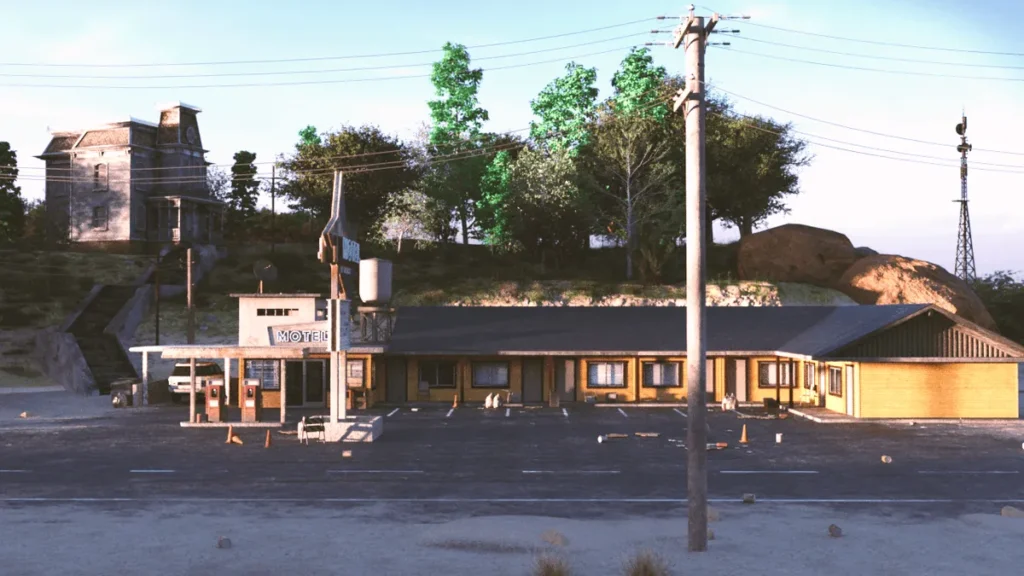
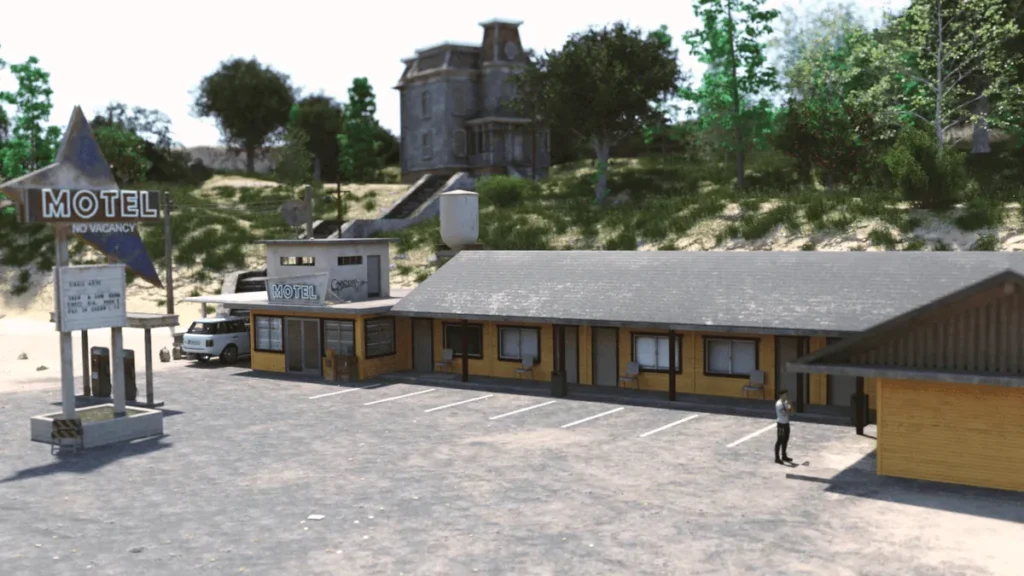
Gates Motel review
Master the interactive experience with our in-depth walkthrough and mechanics breakdown
Gates Motel stands out as a unique interactive experience that combines immersive storytelling with challenging puzzle-solving mechanics. This guide explores everything you need to know about the game, from its compelling narrative structure to the core systems that drive gameplay. Whether you’re just starting your journey at the mysterious motel or looking to uncover all its secrets, understanding the game’s mechanics and design will enhance your experience. We’ll break down the exploration systems, decision-making elements, inventory management, and puzzle-solving strategies that make this interactive adventure so engaging.
Understanding Gates Motel Gameplay Mechanics
Stepping into the creaky lobby of the Gates Motel for the first time, I was immediately struck by a familiar, wonderful panic. 🗝️ The door clicked shut behind me, rain pattered against the grimy windows, and I was utterly, beautifully alone with a mystery. My cursor was my only tool, and a vast, silent building full of locked doors and hidden stories was my opponent. This isn’t a game you blast through; it’s a world you patiently unravel. The core of this experience lies in mastering its intricate Gates Motel gameplay mechanics. To truly conquer its corridors, you need to become a master of observation, a curator of curious objects, and a solver of environmental riddles. This guide is your key to that mastery.
Let’s pull back the curtain on the systems that make this interactive game exploration so compelling.
How Exploration Works in the Interactive Environment
Forget sprawling open worlds; the genius of Gates Motel is in the depth of its intimacy. As a premier first-person navigation game, your journey is defined by a slow, deliberate pace. You don’t run; you creep. You don’t glance; you scrutinize. The entire motel—from the neon-drenched office to the damp, forgotten rooms at the end of the row—is your interactive puzzle box.
The interactive game exploration is governed by a brilliant, dynamic system: time and weather. I learned this the hard way. On my first playthrough, I found a rusted key behind the office counter and immediately tried every door on the property, frustrated when none of them fit. It wasn’t until I waited (a mechanic involving interacting with your room’s clock) until a stormy evening that I noticed something new. The flickering neon sign outside Room 7, which was just ambiance during the day, now cast a long, specific shadow across the wet pavement, pointing to a warped floorboard I’d walked over a dozen times. 🌧️⏳ These environmental storytelling cues are your primary guides. A painting hanging crookedly isn’t just set dressing; it might be hiding a wall safe. The specific pattern of mildew on a bathroom wall could mirror a symbol you found scribbled on a desk ledger in the office.
Pro Tip: Your notebook is your best friend. The game automatically logs important clues, but I always make my own manual notes about odd details: “Room 13 – portrait of a woman, eyes seem to follow you,” or “Laundry room – washing machine makes a thumping sound only at 3 AM in-game.” You’ll be shocked how often these personal observations connect later.
This isn’t random hunting. Progression is gated by your ability to connect clues across locations. Finding a maintenance note about a “faulty breaker for the east wing” in the office gives purpose to your search for the breaker box. Once found, restoring power might allow you to finally turn on the projector in the lounge, revealing a hidden message on the filmstrip. One discovery elegantly enables the next, creating a fantastically satisfying chain of “Aha!” moments.
To see how these core systems intertwine, let’s break them down:
| Core Mechanic | How It Works | Player Impact & Feeling |
|---|---|---|
| Exploration | First-person navigation through a persistent, weather/time-shifted motel. Clues are hidden in plain sight within the environment. | Creates intense atmosphere and a sense of being a detective. Rewards patience and obsessive observation. |
| Inventory Management | A limited-grid system where collected items, notes, and tools can be examined, combined, or used on environmental hotspots. | Forces strategic choice and thoughtful experimentation. Finding the right item combination delivers a powerful sense of ingenuity. |
| Puzzle Solving | Logical challenges that require synthesizing information from multiple locations and inventory items. Rarely isolated to a single room. | Provides the core intellectual satisfaction. Makes the entire motel feel like one interconnected, solvable machine. |
Mastering Inventory Management and Item Combinations
Your inventory in Gates Motel is more than a bag; it’s a portable workbench for your curiosity. The inventory management system is deceptively simple but deeply strategic. You have a limited grid, meaning you can’t hoard every piece of junk you find. This forces you to make constant value judgments. Do you keep this seemingly useless “bent coat hanger,” or drop it for the “heavy ledger book” that might contain a code? 🧳➡️🗑
This is where the magic of item combination mechanics comes into play. The game rarely hands you a single, perfect key. Instead, it gives you components. One of my favorite breakthroughs involved a “dull knife” found in a kitchenette and a “whetstone” tucked away in the garden shed. Individually, they were junk. But in my inventory, I could combine them to create a “sharpened knife,” which then became the tool I needed to pry open a sealed ventilation grate in the office ceiling. This process of experimentation is central to the gameplay loop.
The system brilliantly ties into exploration. You might find a “frayed electrical wire” in the boiler room and a “broken fuse” in a guest room drawer. Their connection isn’t obvious until you later discover the fuse box itself. The Gates Motel gameplay mechanics are designed to make you think laterally. Here’s a piece of actionable advice I swear by:
- Examine Everything Twice: Right-click on every inventory item. A note might have a hidden watermark visible only when held up to a light source in-game. A photograph might have writing on the back.
- Think Physically: If an item could be used with another in the real world, try it in the game. Tape, glue, scissors, keys, and tools can often interact in logical ways.
- Don’t Be Afraid to Drop Things: The motel is persistent. If you need space, drop a less-promising item in a central location like the lobby. You can always circle back if you realize you need it later. This is a crucial part of a smart inventory management system.
Solving Environmental Puzzles and Unlocking Progression
This is where your skills as an explorer and an inventory manager converge into pure, unadulterated problem-solving. The puzzle solving strategies you’ll need in Gates Motel are less about complex math and more about forensic reconstruction. You are piecing together a story, and the puzzles are the locked chapters.
Let’s talk about that infamous squeaky floorboard near room 13. Early on, you might hear it creak. A casual player might ignore it. But if you’ve been thorough in your interactive game exploration, you may have found a guest’s diary in Room 10 mentioning “hiding my treasures where the floor sings.” Suddenly, that ambient sound is a clue. You might need to find a crowbar (itself a multi-step item hunt) to pry up that specific board, revealing a hidden compartment. This is environmental storytelling at its finest—the world itself is the narrator, and the puzzles are its sentences.
The puzzles demand you connect dots across the entire setting. A symbol on a stained-glass window in the lobby might match the pattern of buttons you need to press on an old radio found in the attic. The sequence for a safe’s combination could be derived from the room numbers listed in the check-in register that have odd, repeated notations next to them.
“I trusted the whispering voice coming from the air vent in Room 6, following its instructions to leave a specific item in the courtyard at midnight. This opened a new, eerie path involving shadow figures that offered cryptic, but crucial, lore. On my next playthrough, I was cautious, refusing the voice’s request. This led to the vent being sealed shut, cutting off that path, but causing a different, more paranoid sequence of events where I had to find an alternative route through the maintenance tunnels. The game remembered my choice.”
This example highlights the consequence-driven nature of the puzzles. Your actions and choices in how you solve (or even approach) a puzzle can branch the narrative and exploration opportunities. It’s not just about if you solve it, but how.
To develop effective puzzle solving strategies, adopt this mindset:
1. Assume Everything is Connected: That cryptic note in the library is about the weird machine in the basement.
2. Revisit Old Locations: New items or clues can completely change the context of a room you “cleared” hours ago.
3. Step Away: If stuck, literally walk away (in-game). Go to a different wing. The change of scenery often jogs loose a connection your brain was missing.
The ultimate satisfaction in Gates Motel comes from this beautiful synergy. Your first-person navigation game exploration fills your inventory and mind with clues. Your management and combination of those items provide the tools. And your application of logic to the environment’s story unlocks the next layer of the haunting mystery. Mastering these Gates Motel gameplay mechanics isn’t just about finishing the game; it’s about fully immersing yourself in its rain-soaked, neon-lit world and emerging as the architect of your own understanding. Happy investigating. 🔍✨
Gates Motel delivers a compelling interactive experience that rewards careful exploration, strategic thinking, and meaningful decision-making. By understanding the core gameplay mechanics—from first-person exploration to inventory management and environmental puzzle-solving—you’ll be better equipped to uncover the motel’s mysteries. The game’s strength lies in how it weaves narrative choices with environmental storytelling, creating a unique experience where your decisions genuinely shape the outcome. Whether you’re drawn to the slow-burn suspense of the storyline or the satisfaction of solving complex puzzles, Gates Motel offers depth that encourages multiple playthroughs. Take your time exploring every corner, read the cryptic notes carefully, and don’t hesitate to experiment with item combinations. The game rewards thorough investigation and thoughtful decision-making, making each playthrough a fresh adventure with new discoveries waiting to be uncovered.